
Put the Pond to Bed: Five Fall Moves That Save Your Spring
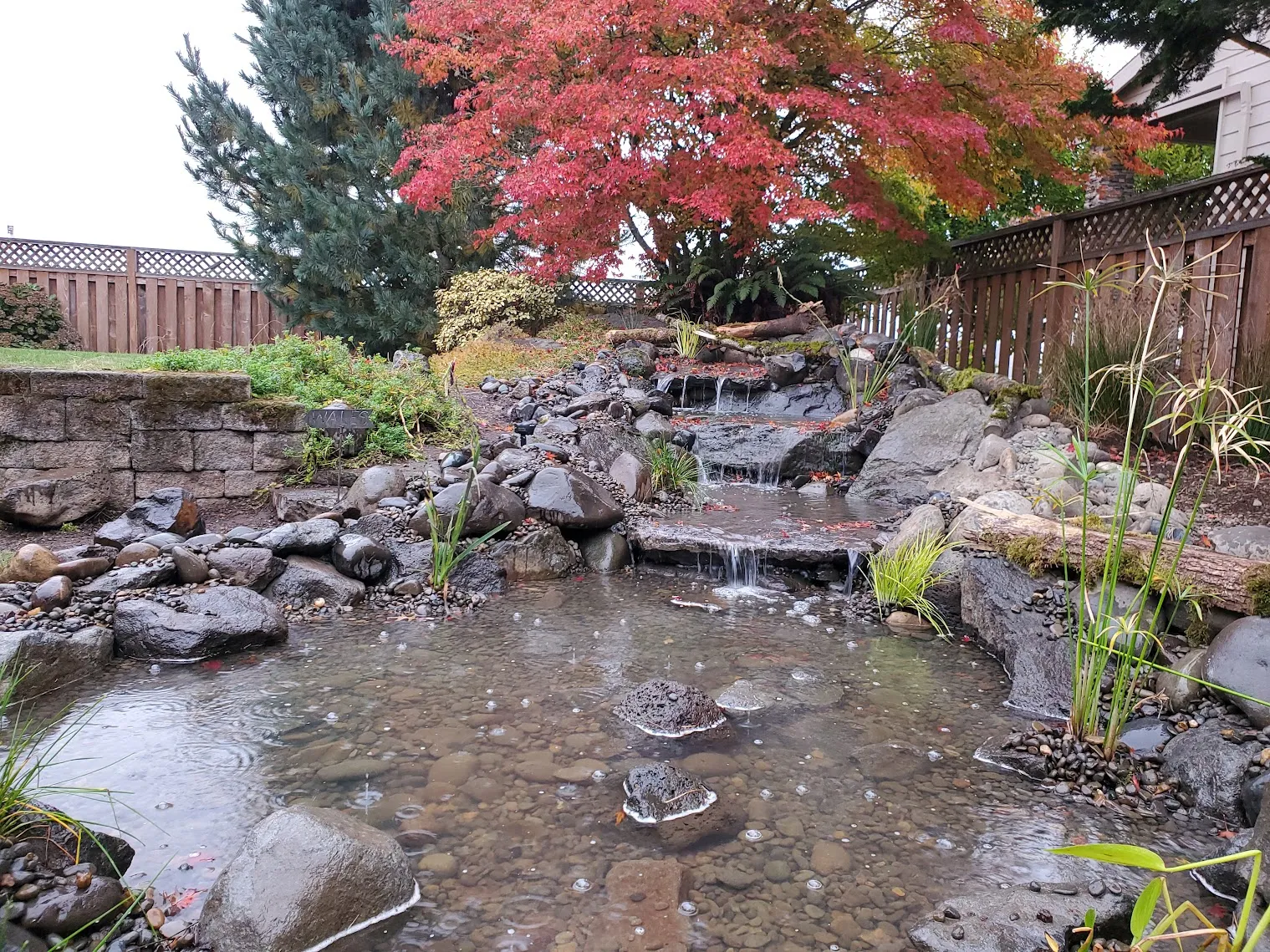
Fall chores don’t disappear — they sink
Every yard runs on a version of that rule. The gutters you didn’t clear become February’s overflow; the beds you didn’t cut back become spring’s first chore. Skipped fall work doesn’t go away — it just moves downstream and waits.
In a pond, that’s not a figure of speech. A pond does its winter underwater, out of sight. Everything that goes into the water between now and Thanksgiving — leaves, uneaten fish food, collapsing plants — spends the cold months quietly becoming muck. Come spring, you either open a pond that coasted through winter, or you meet everything you skipped, composted and waiting on the bottom.
The difference is about an afternoon. Here are the five moves that matter.
1. Close the kitchen early
Fish run at the temperature of their water — no sweaters, no thermostats. As the pond cools through the 60s, a koi’s digestion slows way down, so its appetite fades and its table manners get worse: food that isn’t eaten in the first few minutes just sinks. Feed lighter, switch to a cool-water (wheat-germ-based) food, and give them only what disappears while you stand there.
Once the water holds below 50°F, stop feeding entirely until spring — the fish are running on stored reserves, exactly as designed. It feels stingy. It isn’t. Every pellet they don’t eat now is fertilizer for the algae you’ll fight in May.
2. Give the plants their fall haircut
The hardy hibiscus, rushes, and ornamental grasses at the water’s edge are wrapping up for the year, and they all share the same retirement plan: fall in. Every stalk that fades and folds into the pond spends the winter breaking down on the pond floor.
Beat them to it. Cut the spent tops back before they reach the water — tired lily leaves too, down near the crown. Ten unhurried minutes with pruners sends the whole mess to the yard-debris bin instead of letting it settle under the fish. The plants don’t mind; they’re headed dormant either way, and they’ll come back cleaner for it.
3. Get a net up before the maples let go
When the big leaf drop starts in the valley, it doesn’t trickle — it dumps. A skimmer that handles a summer’s worth of debris without complaint will bury itself twice a day in peak season, and everything it misses ends up on the bottom.
One move beats all the raking: stretch a leaf net over the water before the trees cut loose, and take it off when they’re finished. An hour of setup catches nearly all of the season’s drop in one piece of mesh. It’s the best hour you’ll spend on the pond all fall, and the move most often skipped — because the week it needs doing, it doesn’t look necessary yet.
4. Let the biology finish its shift
A healthy pond employs an invisible cleanup crew — beneficial bacteria that spend all season digesting the waste the skimmer never sees. They work slower as the water cools, and they eventually clock out for winter. The mistake is quitting on them early.
Fall is the time to deal with green water or stubborn string algae and accumulated bottom muck — most treatments want water above 50°F to do their job. As the pond cools past that mark, switch the crew to a cold-water bacteria formula; it keeps them on shift weeks after the regular blends have quit. Once real winter sets in, even that slows to a crawl — whatever the bottom looks like in late November is pretty much what will greet you in March.
5. A five-minute physical for the hardware
Five minutes with your eyes on the equipment saves a February surprise:
- Skimmer basket — empty it every time you walk past during the drop; it’s a ten-second job that keeps the pump from starving.
- Pump flow — if the falls look lazier than they did in July, clean the pump intake now, not in January.
- Auto-fill and outdoor shut-offs — inspect the float, and know which valve kills the water before the first hard freeze does.
- Timers and lighting — dark comes early now; aim the lights and reset the timers so the pond stays part of the view.
And make the winter call on purpose: in our mild valley winters, most systems simply run all season — moving water resists icing and the falls look spectacular on a frosty morning. If you do shut a fish pond down, leave a hole open in any ice that forms so the pond can keep breathing.
What sinks in October surfaces in March
No pond? The rule still runs all over the yard — steady fall care is simply the right way to put a landscape to bed, and everything wakes up better for it.
With a pond, the difference shows. A water feature that gets its fall afternoon comes through winter cleaner; one that skips it opens with a shovel — a spring cleanout that starts several inches deeper than it needed to.
Either way, the right way to open a pond’s year is a proper spring cleanout — the early-season reset that pumps the winter out, rinses the rock, and hands the pond back to its biology in good order. It’s a genuine piece of work, and worth it — your fall afternoon just makes for a smoother visit and a healthier pond on the other side. Booking it is how the season starts right.
And booking is the one move on this list you can make from the couch: our spring cleanout list builds over the winter and runs in order, so the names on it early get their ponds back before the first warm stretch wakes everything up. We’ve cared for water features across Aurora, Lake Oswego, Oregon City, Canby, Wilsonville, Hubbard, and Woodburn since 1996 (LCB #6834). Get on the spring cleanout list or call (503) 678-7744 — then go get the net up before the maples make the decision for you.