
Keep your pond, fountain, or waterfall clear and healthy — with fewer headaches. The real drivers of algae, a simple product toolbox, why water levels drop (even without a leak), and the upgrade that transforms your feature at night.
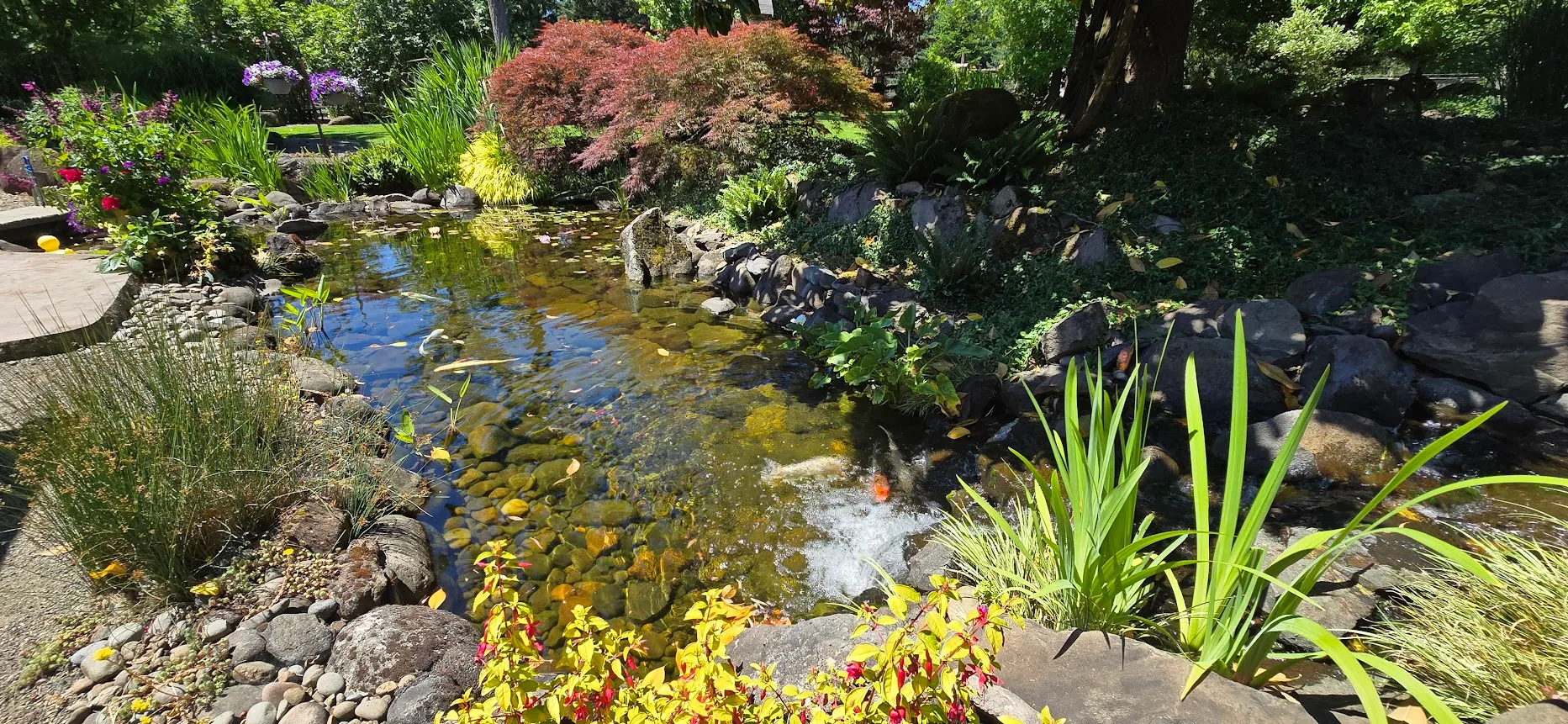
If you have a pond, fountain, or waterfall, you already know how much it can elevate a yard — until algae, murky water, or mystery water loss starts stealing the fun. The good news: most of it comes down to a few habits and a little know-how. Here's the practical version, from 30 years of building and caring for water features across the Willamette Valley.
The goal isn't sterile water. It's a stable, healthy ecosystem that stays attractive with fewer surprises — good curb appeal, a calming backyard destination, and a home for birds, frogs, and pollinators.
Understanding algae: it's about nutrients
Algae shows up when the pond has extra fuel — mainly phosphorus and nitrogen. Those nutrients act like fertilizer, leading to green water (suspended algae), string algae (blanket weed), or cloudy conditions that stress fish and cut visibility.
A balanced pond tolerates some algae, and that's normal — it even adds oxygen and supports the food web. The trouble is when it takes over, smothering plants and clogging intakes. Managing it well usually comes down to one thing: reduce excess nutrients while supporting the biology that keeps water stable.
Common nutrient sources:
- Organic debris — leaves, needles, dead plant material, uneaten food
- Overfeeding fish
- Runoff from lawns and garden beds (especially fertilizers)
- Fish waste and decomposing sludge
A quick reality check: some nutrients you can't fully control
Ponds are open ecosystems, so some nutrient input is unavoidable. Nitrogen in rainwater and storms, heavy pollen that breaks down into fines, windblown dust and soil, and seasonal swings in sunlight and temperature can all push algae. That's why algae often flares in spring and early summer — it's usually not something you did wrong, it's the natural nutrient cycle and the season stacking the deck.
Best practices for nutrient control
These habits are the foundation of clear water and lower-maintenance performance:
- Remove debris early. Skim leaves and floating material before it sinks and breaks down. Empty skimmer baskets often during heavy leaf drop.
- Feed fish lightly. With a small-to-moderate fish load, feed 1–2 times per week — only what they'll eat in a few minutes. Overfeeding is one of the fastest ways to fuel algae and sludge.
- Block fertilizer runoff. Keep fertilizers and compost teas well away from the water's edge; use slow-release and avoid phosphorus near the pond.
- Support filtration and circulation. Clean mechanical filters regularly so they trap debris instead of letting it decay in the system.
- Use plants as nutrient "sponges." Aquatic plants pull nutrients straight from the water and reduce algae's advantage.
Filtration that works with nature: plants & wetlands
Aquatic plants are one of the best long-term algae controls — they compete for nutrients and manage sunlight. You can take it further with a wetland-style filtration zone:
- Water lilies and floaters shade the surface, reducing the sunlight that drives blooms.
- Marginals along the edges filter water through their root zones and add structure and seasonal color.
- Submerged oxygenators support oxygen levels and nutrient uptake.
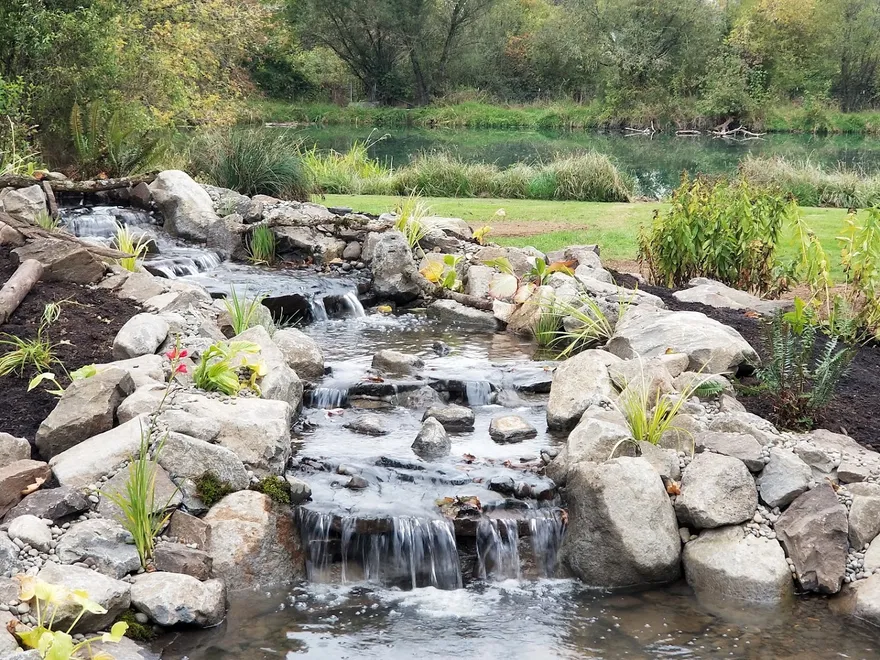
- Wetland filtration (bog filters / constructed wetlands) routes water slowly through gravel and plant roots, where bacteria and plants remove nutrients and fine particles — naturally polishing the water and cutting sludge and algae pressure over time.
A practical target is 50–70% surface coverage during peak summer. Combined with a wetland filter, many ponds stay clearer with far fewer rescue treatments. For the deep dive, see our article on the art of algae management.
Your maintenance toolbox
Sometimes the pond needs a boost — during heat waves, after storms, or at spring startup. Start with prevention (debris removal, bacteria, plants and wetlands), then step up to spot treatments when algae gets ahead of you. We stock and recommend:
- Barley extract — A clean, fast alternative to straw bales — supports clarity and discourages algae over time.
- Beneficial pond bacteria — Breaks down sludge, fish waste, and dissolved organics — reducing the nutrient load algae feeds on.
- Nualgi — Encourages beneficial diatoms that outcompete nuisance algae and strengthen the pond food chain.
- GreenClean — A fast oxidizer that knocks back string algae and blooms on contact when applied as directed.
- Algaway 5.4 — A concentrated option that can quickly stop green water and string algae when conditions demand it.
Understanding water loss (not every drop is a leak)
Common non-leak causes of a dropping water level:
- Evaporation on hot, sunny, low-humidity days
- Wind pulling moisture off the surface
- Plant evapotranspiration — plants using water
- Wildlife — animals drinking, birds bathing, waterfall splash
- Bees and pollinators — in warm weather they visit for a drink and to carry water back to the hive; individually tiny, but steady daytime traffic adds up in smaller features
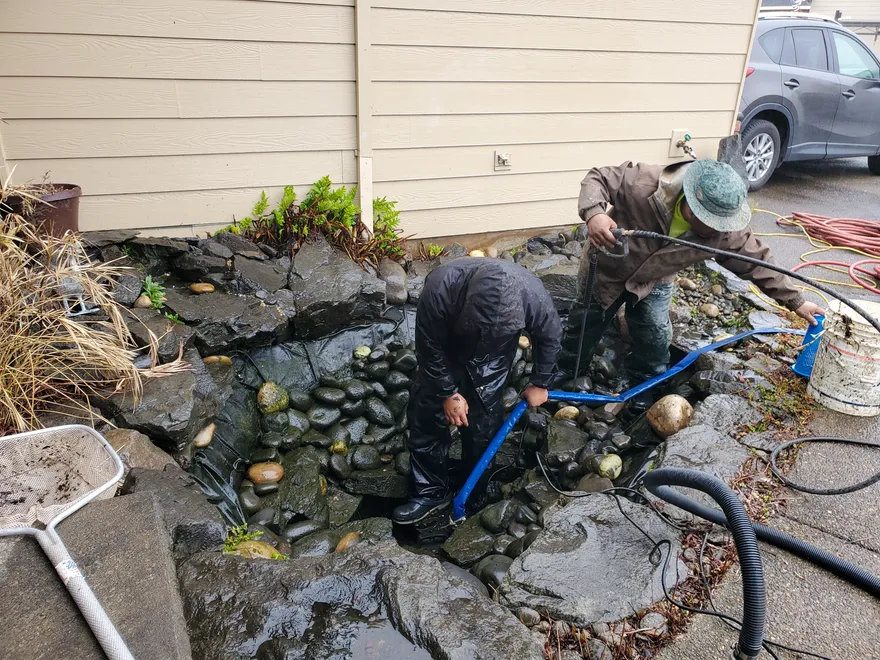
Top off as needed (use dechlorinator on city water), and prefer smaller, frequent top-offs over big swings that stress fish and bacteria. Normal loss varies by feature — roughly 1–5 inches per week depending on size, waterfall run, and exposure, and negative-edge features can lose more. Losing noticeably more than usual for your feature? That's worth checking for leaks, wet spots, or waterfall splash-out — something we look at on every cleanout.
Evening magic: low-voltage lighting
The single biggest enjoyment upgrade is low-voltage (LV) lighting. Your pond doesn't "turn off" at sunset — good lighting makes it the focal point of the yard at night:
- Extends enjoyment — after dinner, during gatherings, or from inside the house
- Highlights movement and texture — waterfalls shimmer, stone detail pops, planting gains depth
- Improves safety — subtle light near edges, steps, and paths without harsh glare
- Adds premium curb appeal — a lit feature reads as intentional, high-end design
Underwater LED fixtures, spotlit cascades, and soft path lighting are the common upgrades — one of the most cost-effective "wow factor" add-ons you can make. We check your LV lighting at every water feature cleanout.
With a nutrient-smart routine, healthy plant coverage (and wetlands when possible), and the right tools when needed, your water feature stays clear, vibrant, and inviting — day and night. Questions about your specific setup? Call us at (503) 678-7744.
Water feature cleanout — two ways in
Book this season's cleanout
Cleanout season runs February through June. Pick your preferred month, tell us what to look at, and lock in your window before the schedule fills.
Reserve my cleanoutNot ready to book? Join the cleanout list
Be first to hear when spring signups open, plus seasonal water feature reminders. No spam, unsubscribe anytime.
Almost in — check your inbox to confirm, and we'll see you at signup time.
That didn't go through — please try again.